


Complete Guide to Edfu Temple
Edfu Temple Is One Of The Most Remarkably Preserved Ancient Temples In Egypt, Offering Visitors A Clear And Powerful Glimpse Into The Architectural, Religious, And Cultural Life Of The Ptolemaic Period. Located Between Luxor And Aswan Along The Nile River in Egypt, Edfu Temple Stands As A Massive And Beautifully Intact Monument Dedicated To The Falcon-Headed God Horus. With Its Towering Gateways, Detailed Reliefs, Massive Columns, And Sacred Inner Chambers, Edfu Has Become A Highlight For Millions Of Travelers, Especially Those Sailing On Nile Cruises.
This Complete Guide To Edfu Temple Covers History, Main Highlights, Visiting Tips, Opening Hours, And Frequently Asked Questions — Giving You Everything You Need To Plan An Insightful And Enjoyable Visit.
Overview Of Edfu Temple
Edfu Temple Is One Of The Best-Preserved Temples In All Of Egypt, Thanks To Centuries Of Protection Under Desert Sand And Later Careful Excavation. Its Walls, Carvings, Columns, And Ancient Inscriptions Remain Almost Fully Intact, Allowing Visitors To Experience The Structure Much As It Appeared Over 2,000 Years Ago. Situated In The City Of Edfu, This Temple Reflects The Power, Religious Rituals, And Artistic Achievements Of The Ptolemaic Kings Who Left A Major Impact On Egyptian Architecture. Many Travelers Combine Edfu With Nearby landmarks such as Kom Ombo Temple during their journey between Luxor and Aswan.
Why Edfu Is One Of The Best-Preserved Temples In Egypt
Edfu Temple Retains Its Original Layout, Towering Outer Walls, Hieroglyphs, And Statues Because It Was Buried By Sand For Centuries, Protecting It From Erosion And Human Damage. When Excavated In The 19th Century, Scholars Found An Astonishingly Complete Temple — Making It One Of The Best Places For Visitors To Understand Ancient Egyptian Religion And Construction Techniques. Its Massive Courtyards, Painted Ceilings, Ritual Chambers, And Well-Preserved Reliefs Make Edfu A Living Museum Of Ancient Egyptian Art And Architecture, comparable in preservation to Dendera Temple Complex.
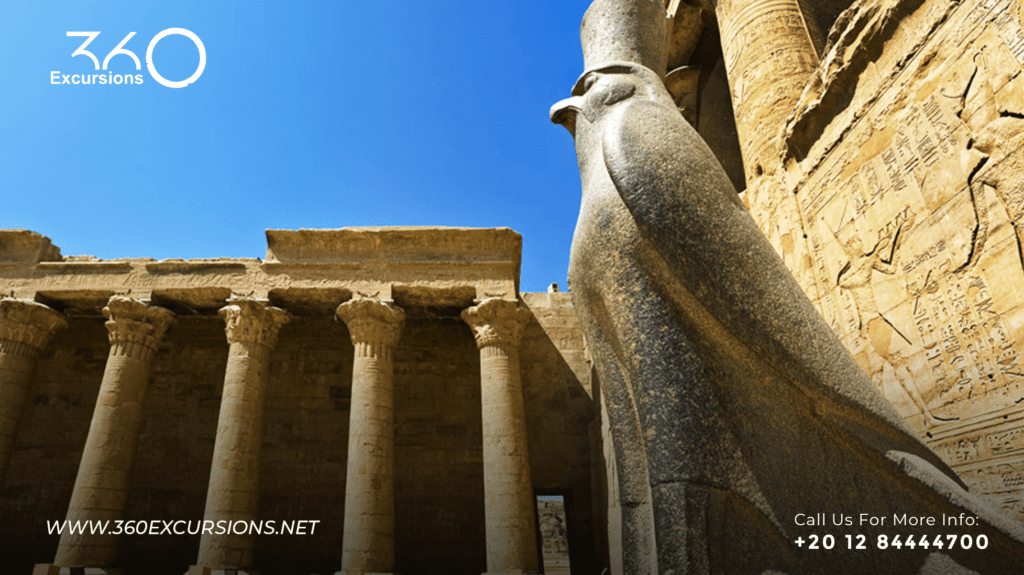
Edfu Temple History
Edfu Temple Has A Rich Historical Background Rooted In Religion, Politics, And Ptolemaic Architecture.
Ptolemaic Period
Construction Of Edfu Began In 237 BC During The Reign Of Ptolemy III And Continued For Nearly 180 Years Until Completion Under Ptolemy XII. The Ptolemies, Greek Rulers Who Followed Alexander The Great, Adopted Egyptian Religious Traditions And Built Monumental Temples To Honor Local Deities. Edfu Is One Of The Finest Examples Of Their Architectural Achievement.
The Structure Reflects A Strong Blend Of Egyptian Religious Art And Greek Influences, Making Edfu Temple A Key Monument For Understanding The Fusion Of Cultures During This Period. Visitors Interested In The Broader Upper Egypt experience often explore Aswan Egypt and its surrounding monuments.
Dedication To Horus
Edfu Is Dedicated To Horus — The Falcon God Of Kingship, Protection, And Victory. Ancient Texts Inscribed On The Walls Describe Mythological Battles Between Horus And His Enemy Seth, Symbolizing The Eternal Struggle Between Good And Evil. Within Edfu Temple, Visitors Will Find Sculpted Images, Ritual Scenes, And Carvings That Reflect Horus’ Important Role In Ancient Egyptian Religion.
The Annual Festival Celebrating The Marriage Of Horus And Hathor Was Also Centered At Edfu, Making It A Major Pilgrimage Site In Ancient Egypt. Many Cruise Itineraries link Edfu with iconic sites such as Luxor Temple Egypt further north along the Nile.
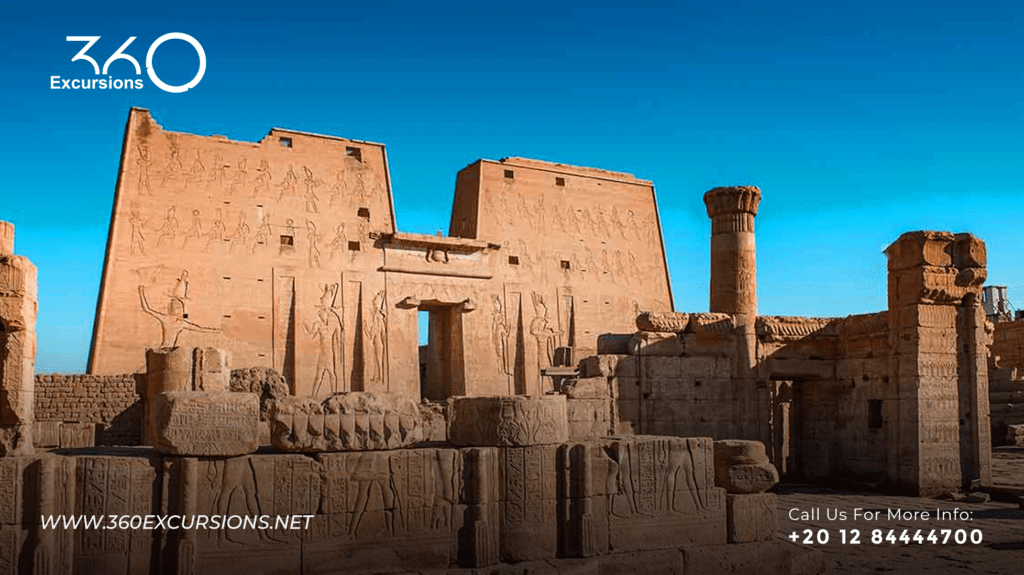
Highlights Of Edfu Temple
Edfu Temple Features Numerous Architectural Marvels And Artistic Details That Reveal The Power And Creativity Of Ptolemaic Egypt.
Great Hall Of Columns
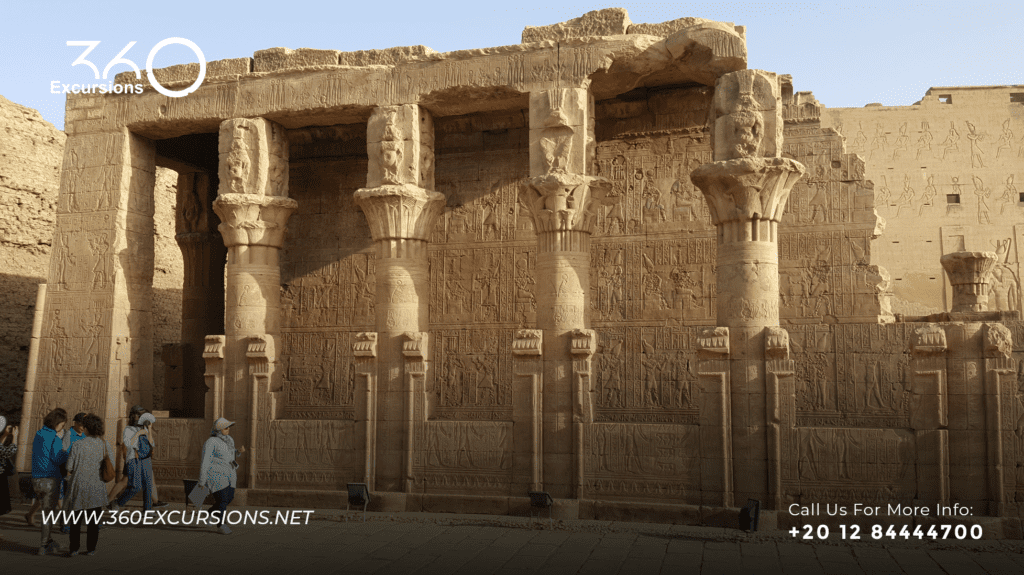
The Great Hall Of Columns, Or Hypostyle Hall, Is One Of The Most Impressive Spaces In Edfu Temple. Filled With Massive Columns Decorated With Lotus And Papyrus Capitals, This Grand Hall Served As A Transitional Area Leading Worshippers From The Outer Courtyard Into The Inner Sanctuaries. The Reliefs Here Depict Offerings, Rituals, And Mythological Scenes That Provide Valuable Insight Into Ancient Religious Practices, similar in grandeur to Karnak Temple Luxor.
Sanctuary Of Horus
At The Heart Of Edfu Lies The Sanctuary Of Horus — The Most Sacred Chamber Where Priests Performed Rituals For The God. In This Chamber Stands A Black Granite Shrine, Which Once Held The Sacred Statue Of Horus. The Sanctuary Is Surrounded By Smaller Chambers Used For Preparing Ritual Items, Storing Sacred Objects, And Conducting Ceremonies. For Many Visitors, This Area Represents The Spiritual Center Of Edfu, much like the inner chambers of Temple of Philae in Aswan.
Reliefs & Inscriptions
Edfu Temple Is Renowned For Its Remarkably Preserved Reliefs And Inscriptions. These Carvings Cover The Walls, Columns, And Gateways, Describing Religious Myths, Ritual Instructions, Royal Decrees, And Daily Offerings. One Of The Most Important Inscriptions Found Here Details The Construction Manual Of The Temple — A Rare Text That Explains How Edfu Temple Was Built And Designed. The Clarity And Detail Of These Reliefs Make Edfu A Major Highlight For Art Historians And Visitors Alike, comparable to narrative carvings inside the Valley of the Kings.
How To Visit (Cruise Stop)
Edfu Temple Is One Of The Most Popular Stops On Nile Cruises Traveling Between Luxor And Aswan. Cruise Ships Usually Dock At Edfu Early In The Morning, Allowing Passengers To Visit The Temple Before The Day Gets Hot. Travelers Are Transported From The Dock To The Temple Using Horse-Drawn Carriages Or Local Transportation.
A Guided Tour Is Highly Recommended To Fully Understand The Symbolism, Rituals, And History Behind The Carvings And Architecture Of Edfu. The Visit Typically Lasts 1.5 To 2 Hours And Offers Plenty Of Time For Photos And Exploration. Travelers Staying in the Red Sea region often combine Upper Egypt highlights through a Luxor Day Trip before continuing south.
Tickets & Opening Hours
Edfu Temple Opens Daily From Early Morning Until Late Afternoon, Though Exact Hours May Vary Between Winter And Summer Seasons. Tickets Can Be Purchased At The Entrance, And Additional Fees May Apply For Photography Or Exclusive Access To Certain Chambers.
Visitors Are Encouraged To Arrive Early, Especially Those Not Traveling On A Cruise, To Avoid Crowds And Enjoy Cooler Temperatures. Hiring A Local Guide Greatly Enhances The Experience By Providing Context And Detailed Explanations Of Edfu Symbolism. Many visitors continue their Nile journey toward Abu Simbel Egypt for a deeper exploration of Nubian heritage.
Conclusion
Edfu Temple Is A Magnificent Example Of Ancient Egyptian Architecture And Religious Art. With Its Towering Columns, Sacred Sanctuary, Mythological Reliefs, And Detailed Inscriptions, It Offers Travelers A Clear Window Into The Rituals And Beliefs Of Ancient Egypt. Whether You Visit As Part Of A Nile Cruise Or On A Day Trip From Luxor Or Aswan, Exploring Edfu Temple Is A Journey Through Time — One Filled With Beauty, Spirituality, And Extraordinary History. Many itineraries also connect Edfu with Luxor Museum to complete the cultural experience.
FAQs
Is Edfu Worth Visiting?
Yes It Is One Of The Best-Preserved Temples In Egypt And A Key Highlight Of Any Nile Cruise.
How Long Does A Visit Take?
Most Travelers Spend Around Two Hours Exploring Edfu Temple, Though History Enthusiasts May Spend Longer.
Can You Visit Edfu Temple Without A Cruise?
It Can Be Reached By Car From Luxor Or Aswan, Though Cruises Offer The Most Convenient Experience.
What Makes Edfu Unique?
Its Exceptional State Of Preservation, Rich Inscriptions, And Powerful Dedication To Horus Make It One Of The Most Important Temples In Egypt.