


Travel Guide to the Colossi of Memnon
The Colossi Of Memnon Are Among The Most Famous, Iconic, And Mysterious Monuments On Luxor’s West Bank. Standing At Nearly 18 Meters Tall, These Massive Twin Statues Have Guarded The Entrance To The Theban Necropolis For More Than 3,400 Years. The Colossi Of Memnon Are All That Remains Of The Grand Mortuary Temple Of Amenhotep III, Once One Of The Largest Temples Of Ancient Egypt. Today, Visitors From All Over The World Come To See These Majestic Guardians Rising Against The Desert Landscape, Surrounded By The Calm Atmospheres Of The Nile Valley And The Eternal Mountains Of The West.
Many Travelers Visit Luxor As Part Of A Fast And Comfortable Route Through Luxor Day Trip, Especially When They Want To See The West Bank Highlights In One Planned Itinerary.
This Travel Guide To The Colossi Of Memnon Covers Their History, Legends, Architecture, Viewing Tips, And Nearby Attractions To Help You Enjoy One Of Luxor’s Most Beloved Landmarks.
Overview Of Colossi of Memnon
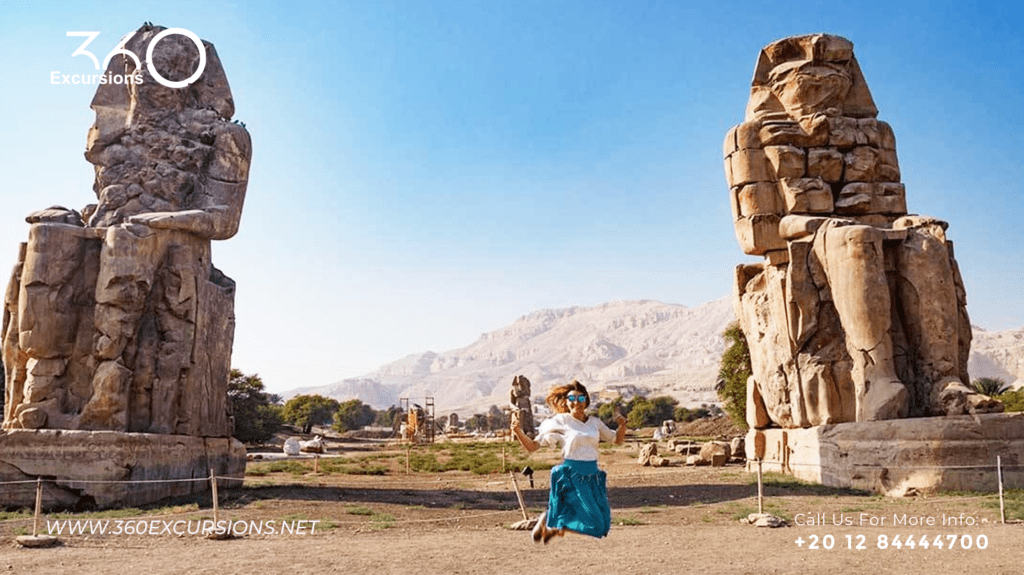
The Colossi Of Memnon Are Two Enormous Seated Statues Of Pharaoh Amenhotep III, Carved From Single Blocks Of Quartzite Stone Brought From Quarries Near Cairo. Each Statue Depicts The Pharaoh Seated With His Hands On His Knees, Looking Eternally Toward The East — The Direction Of The Rising Sun. The Colossi Mark The Entrance To His Mortuary Temple, Which Once Extended Far Behind Them.
Their impressive size, their desert setting, and the ancient myths surrounding them make the Colossi Of Memnon one of the most recognizable and photographed sites in Luxor. Visitors Exploring The City Often Continue Their Route Toward Major temples like Karnak Temple Luxor and Luxor Temple Egypt for a complete view of ancient Thebes.
Who Built The Statues
The Colossi Of Memnon Were Built During The Reign Of Pharaoh Amenhotep III (circa 1386–1353 BC), One Of The Most Powerful Kings Of The 18th Dynasty. The Pharaoh commissioned these giant guardians for his mortuary temple, which celebrated his divine identity, victories, and connection to the gods. Skilled Egyptian artisans carved the statues from massive quartzite blocks transported hundreds of kilometers — a remarkable feat of engineering and labor.
Why They Guard The Theban Necropolis
The Colossi Of Memnon Stand At The Entrance Of Theban Necropolis, A Sacred Region Of Tombs, Temples, And Burial Complexes On Luxor’s West Bank. Their position was symbolic:
- They marked the boundary between the world of the living (East) and the world of the dead (West).
- They honored Amenhotep III and protected his mortuary temple.
- They acted as spiritual guardians of the entire necropolis.
Their placement still gives visitors a sense of entering a timeless, sacred landscape shaped by thousands of years of history.
History
The Colossi Of Memnon Have A Long And Dramatic History Filled With Myths, Earthquakes, And Remarkable Ancient Engineering.
The Singing Statues Myth
In Ancient Times — Especially During The Greco-Roman Period — The Northern Statue Of The Colossi Of Memnon Became Famous For A Strange Phenomenon: It “Sang” At Sunrise. Visitors Reported Hearing A Soft Whistling Or Musical Tone Coming From The Statue.
Ancient Travelers Believed The Sound Came From Memnon, A Legendary Ethiopian Warrior From Greek Mythology. They Thought The Statue Represented Him Calling Out To His Mother, Eos, The Goddess Of Dawn. People Traveled For Thousands Of Miles To Hear The “Memnonian Sound,” Considering It A Sacred Omen.
Modern Research Suggests The Sound Likely Came From Warming Stone Cracking After An Earthquake Damaged The Statue — But The Ancient Myth Remains One Of Egypt’s Most Enchanting Stories.
Earthquake Destruction
In 27 BC, A Major Earthquake Struck Luxor, Damaging The Northern Colossus And Much Of Amenhotep III’s Mortuary Temple. Cracks Opened In The Statue’s Torso, Which Later Contributed To The “Singing” Phenomenon. During The Roman Period, Emperor Septimius Severus Attempted Restoration, Filling The Cracks And Silencing The Mysterious Sound Forever.
Although The Mortuary Temple Behind The Statues Lies Mostly In Ruins Today, Archaeological Projects Have Uncovered Massive Columns, Statues, And Structures That Reveal Its Original Grandeur, and many visitors deepen their West Bank understanding by visiting Luxor Museum after touring the monuments.
What To See
Visitors To The Colossi Of Memnon Can Explore Both Statues Closely And Observe Their Fascinating Details.
Eastern Statue
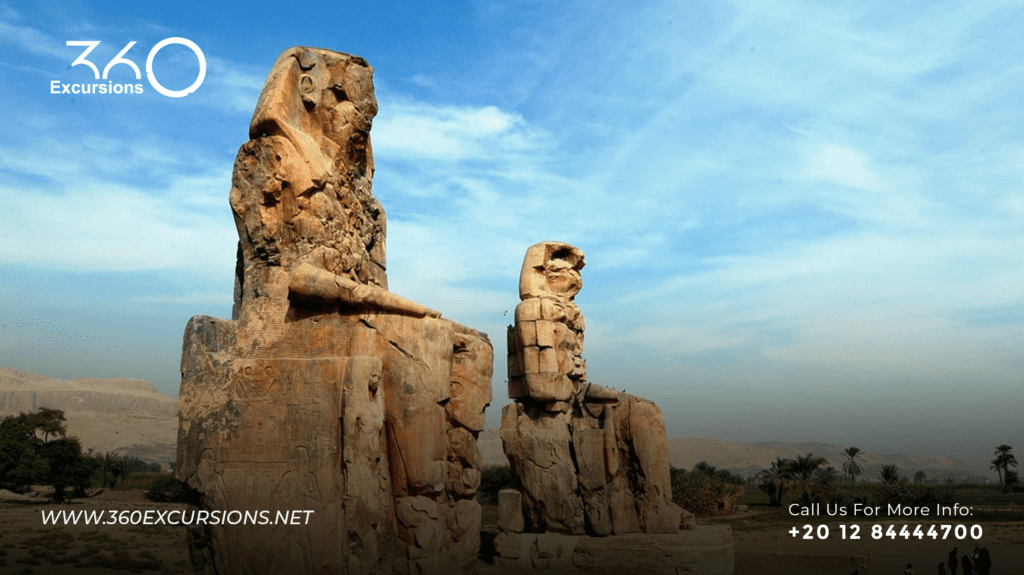
The Eastern Statue (The One On The Left When Facing The Statues) Is Remarkably Well-Preserved In Its Lower Half. Its Powerful Seated Pose, Strong Facial Features, And Large Hands Placed On Its Knees Reflect Amenhotep III’s Majesty. Carvings Of The Pharaoh’s Mother And Wife Appear Along The Sides Of The Throne, Along With Symbolic Scenes Representing Unity And Protection.
Western Statue
The Western Statue Is More Damaged Due To Earthquakes And Ancient Erosion, Yet It Remains Equally Impressive. The Cracks In The Upper Torso Gave Rise To The Ancient “Singing Statues” Myth. Today, Visitors Can Still Spot These Cracks And Imagine The Mysterious “Music” Travelers Described Thousands Of Years Ago.
Both Statues Sit Side-By-Side, Creating A Dramatic And Unforgettable Image Against Luxor’s Desert And Agricultural Landscape.
Best Viewing Times
The Best Time To Visit The Colossi Of Memnon Is:
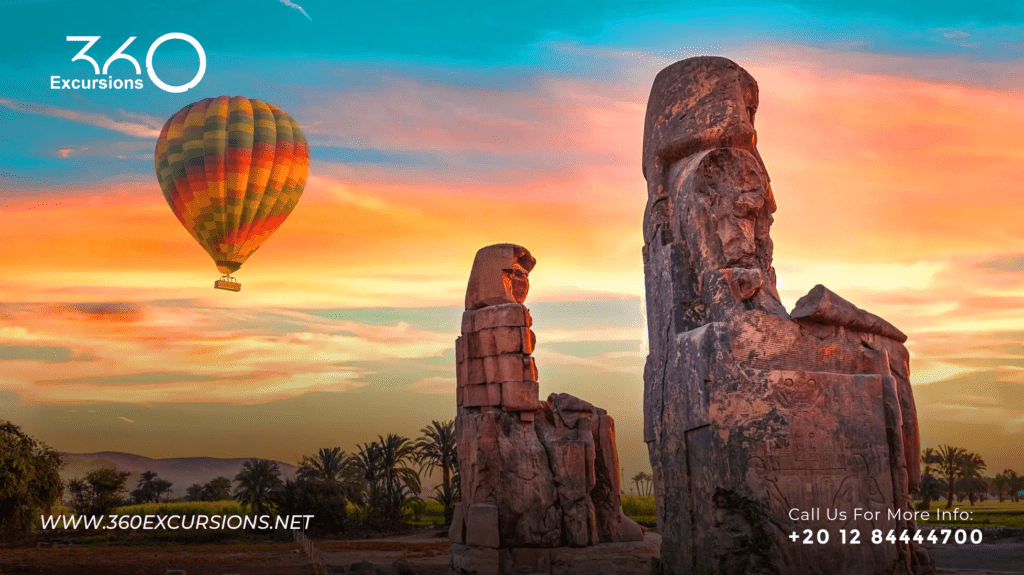
- Sunrise: Magical Lighting, Peaceful Atmosphere, And Ideal Photography Conditions.
- Early Morning: Fewer Crowds; Cooler Temperatures.
- Late Afternoon (Golden Hour): Warm Sunlight Beautifully Highlights The Stone Carvings.
Night Visits Are Not Permitted, But The Statues Can Be Viewed From A Distance As Part Of Evening Tours On The West Bank.
Nearby Attractions
The Colossi Of Memnon Are Conveniently Located Near Many Of Luxor’s Most Important West Bank Sites, Making It Easy To Combine Them With A Full Day Of Sightseeing.
Nearby Attractions Include:
- Mortuary Temple Of Hatshepsut: A Stunning Three-Tiered Temple Built Into The Cliffs Of Deir El-Bahari. Learn More In The Temple of Hatshepsut.
- Valley Of The Kings: Egypt’s Most Famous Burial Site. Explore Details In The Valley of the Kings.
- Medinet Habu: One Of The Best-Preserved Temples In Egypt. Read The Guide To Medinet Habu Temple.
- Valley Of The Queens: A Sacred Necropolis With Royal Tombs. See the Valley of the Queens.
- Tomb Of Nefertari: The Most Famous Tomb In The Queens’ Valley. Visit Tomb of Nefertari.
The Colossi Of Memnon Are Often The First Stop On Any West Bank Tour Thanks To Their Location At The Entrance Of The Necropolis.
Conclusion
The Colossi Of Memnon Are More Than Just Two Giant Statues — They Are Ancient Guardians Of The Theban Necropolis, Symbols Of Amenhotep III’s Royal Power, And Timeless Witnesses To Thousands Of Years Of History. With Their Mythical “Singing” Past, Their Monumental Scale, And Their Beautiful Setting, The Colossi Offer One Of The Most Atmospheric And Unforgettable Experiences In Luxor.
Whether You Visit At Sunrise, Explore The Nearby Temple Ruins, Or Capture Photos Of The Statues Against The Desert Mountains, The Colossi Of Memnon Stand As A Stunning Introduction To The Wonders Of Luxor’s West Bank.