


Complete Guide to the Meidum Pyramid
The Meidum Pyramid Is One Of Egypt’s Most Enigmatic And Fascinating Ancient Monuments — A Structure That Marks A Critical Turning Point In The Evolution Of Pyramid Architecture. Located South Of Cairo Near The Fayoum Egypt Region, The Meidum Pyramid Stands Alone In The Desert, Partially Collapsed Yet Powerfully Evocative Of Ancient Egypt’s Architectural Ambitions. Unlike The Perfectly Formed Pyramids Of Giza, The Meidum Pyramid Reveals Experimentation, Risk, And Transformation — Offering Visitors A Rare Opportunity To Witness How Ancient Builders Learned, Adapted, And Innovated.
This Complete Guide To The Meidum Pyramid Explores Its Overview, History, What To See On Site, Tickets And Visiting Information, How To Reach The Pyramid, And Frequently Asked Questions — Providing A Deep And Accessible Understanding Of One Of Egypt’s Most Important Transitional Monuments.
Overview Of The Meidum Pyramid
The Meidum Pyramid Is Considered A Transitional Pyramid — A Crucial Step Between The Early Step Pyramids And The Later True Pyramids With Smooth Sides. Originally Designed As A Step Pyramid And Later Modified Into A True Pyramid, The Meidum Pyramid Represents An Experimental Phase In Pyramid Construction During Egypt’s Old Kingdom, and it fits naturally into a broader pyramid route that includes Saqqara Pyramids.
Transitional Pyramid Design
The Meidum Pyramid Is Architecturally Significant Because It Shows The Shift From Tiered Step Pyramids To Smooth-Sided True Pyramids. Archaeological Evidence Suggests That The Pyramid Was First Built With Several Stepped Layers, Similar To The Step Pyramid Of Djoser, Before Being Encased In Limestone To Create A Smooth Outer Surface.
This Transitional Design Is Important Because:
- It Demonstrates Architectural Innovation
- It Reveals Trial-And-Error Construction Methods
- It Influenced Later Pyramid Designs
- It Led To Improvements Seen At Dahshur And Giza
Without The Meidum Pyramid, The Later Success Of True Pyramids Might Not Have Been Possible, especially when comparing development stages across sites like the Dahshur Pyramids.
Collapse Mystery
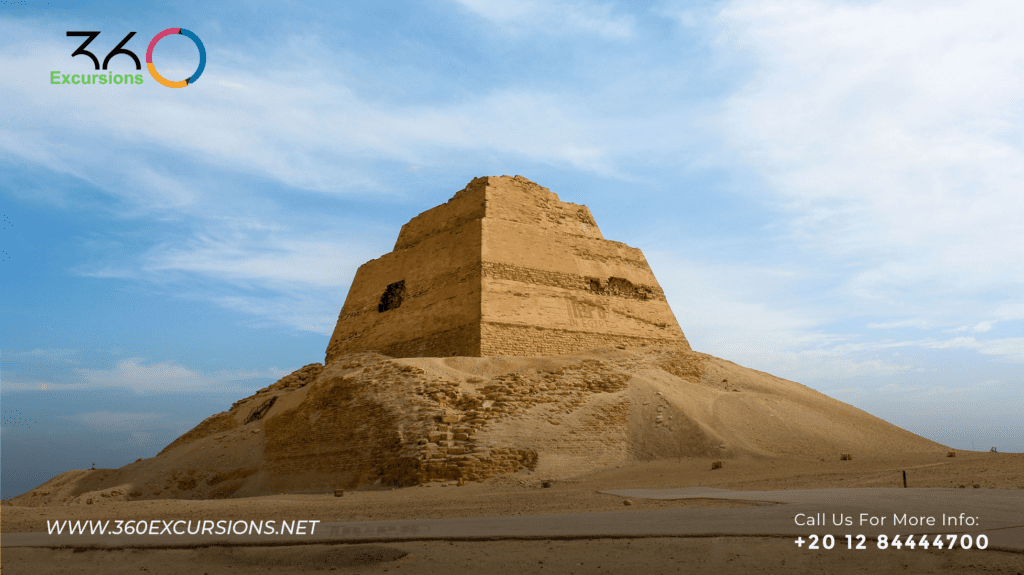
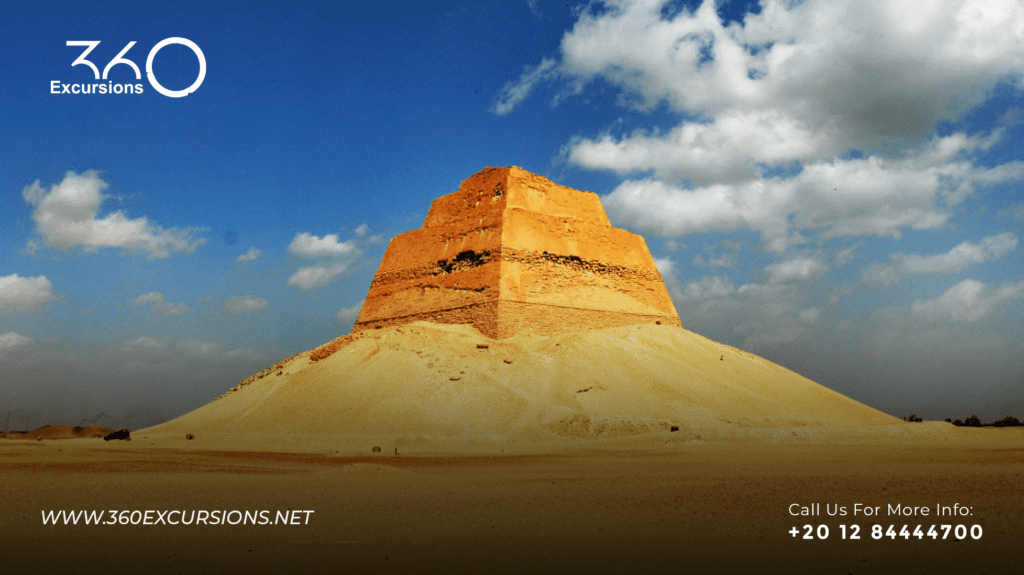
One Of The Most Striking Features Of The Meidum Pyramid Is Its Collapsed Appearance. Today, Only The Central Core Of The Pyramid Remains Standing, While Much Of The Outer Structure Lies In A Massive Ring Of Rubble At Its Base.
The Collapse Mystery Has Fascinated Scholars For Decades. Possible Reasons Include:
- Structural Weakness Due To Design Changes
- Poor Foundation Preparation
- Use Of Inadequate Construction Angles
- Natural Erosion Over Time
Some Theories Suggest The Pyramid Collapsed During Construction, While Others Propose That It Fell Long After Completion. Regardless Of The Cause, The Collapse Gives The Meidum Pyramid Its Unique And Dramatic Profile.
History Of The Meidum Pyramid
The History Of The Meidum Pyramid Is Closely Linked To One Of Egypt’s Most Influential Pharaohs And A Period Of Rapid Architectural Experimentation.
Sneferu’s Construction
The Meidum Pyramid Is Commonly Attributed To Pharaoh Sneferu, The Founder Of The Fourth Dynasty And One Of The Most Prolific Pyramid Builders In Egyptian History. Sneferu Is Known For Initiating Major Advances In Pyramid Construction, Including The Bent Pyramid And The Red Pyramid At Dahshur.
Sneferu’s Role In The Meidum Pyramid Includes:
- Oversight Of Its Expansion And Modification
- Use Of New Construction Techniques
- Attempts To Transform A Step Pyramid Into A True Pyramid
The Meidum Pyramid Is Believed To Be Sneferu’s First Major Experiment In Achieving A Smooth-Sided Pyramid — An Ambition That Would Later Be Perfected Elsewhere.
Modifications Over Time
The Meidum Pyramid Underwent Several Modifications During Its Construction And Possibly After Completion. These Changes Included:
- Adding Outer Limestone Layers
- Altering The Slope Of The Pyramid’s Sides
- Adjusting Internal Chambers And Passageways
While These Modifications Aimed To Improve Stability And Appearance, They May Have Contributed To Structural Weakness. The Pyramid’s History Of Change Reflects A Period Of Learning And Adaptation That Defined Sneferu’s Reign.
What To See
Visiting The Meidum Pyramid Offers A Quiet And Intimate Experience, Far From The Crowds Of Giza Or Saqqara.
Pyramid Base
The Most Striking Sight At The Meidum Pyramid Is Its Tower-Like Core Rising From A Vast Field Of Debris. Visitors Can Walk Around The Pyramid Base And Observe:
- The Massive Rubble From The Collapsed Outer Layers
- The Steep Central Structure Still Standing
- Clear Views Of Original Construction Blocks
The Unusual Shape Allows Visitors To Understand Pyramid Construction In A Way That Intact Pyramids Do Not.
Mastabas Nearby
Surrounding The Meidum Pyramid Are Several Mastabas — Flat-Roofed Tombs Belonging To Officials And Family Members Associated With The Pyramid Complex. These Mastabas Are Important Because They:
- Provide Insight Into Old Kingdom Burial Customs
- Contain Burial Chambers And Chapels
- Show The Social Hierarchy Around The Pyramid
Some Mastabas Near Meidum Are Famous For Their Well-Preserved Wall Paintings, Including Scenes Of Daily Life And Agriculture.
Tickets & Visiting Info
The Meidum Pyramid Is Open To Visitors And Offers A Calm, Uncrowded Experience Compared To Major Tourist Sites.
Visiting Information Typically Includes:
- Affordable Entry Ticket
- Minimal Crowds
- Limited On-Site Facilities
- Open Access To The Pyramid Exterior
Facilities Are Basic, So Visitors Should Bring Water, Sun Protection, And Comfortable Shoes.
How To Reach
The Meidum Pyramid Is Located South Of Cairo Near The Fayoum Region And Is Best Reached By Road.
Transportation Options Include:
- Private Car Or Taxi: The Most Convenient Option
- Guided Tours: Often Combined With Fayoum Or Dahshur
- Day Trip From Cairo: Approximately 2–2.5 Hours
If You Want A Simple Logistics Option To start your Cairo-based itinerary, many travelers first book a Cairo Day Trip by bus and then schedule Meidum as a quieter add-on day outside the city.
For Time-Sensitive Travelers, a fast Cairo Day Trip by Plane can also fit into a multi-stop program if your base is outside Cairo.
If You’re planning a broader “pyramids evolution” route, some itineraries combine Meidum with Dahshur and Saqqara across two days, similar in structure to a Cairo and Alexandria tour style schedule (two days, multiple key sites, early starts).
Conclusion
The Meidum Pyramid Is A Monument To Experimentation, Ambition, And Architectural Evolution. Though Partially Collapsed, Its Significance Remains Immense — Standing As The Missing Link Between Early Step Pyramids And The Perfect True Pyramids That Followed. Visiting The Meidum Pyramid Offers More Than A Photo Opportunity; It Provides Insight Into How Ancient Egypt Learned From Failure And Transformed It Into Mastery. For Travelers Seeking A Deeper Understanding Of Egypt’s Pyramid-Building Journey, The Meidum Pyramid Is An Essential And Unforgettable Stop — Especially When Paired With nearby classics like the Great Pyramids of Giza to see the full arc of development.
FAQs
Is The Meidum Pyramid Worth Visiting?
It Offers A Unique And Educational Experience Unlike Any Other Pyramid.
Can I Enter The Meidum Pyramid?
Interior Access Is Limited And May Not Always Be Available.
How Long Does A Visit Take?
Approximately 45–60 Minutes.
Is The Site Crowded?
It Is One Of Egypt’s Quietest Pyramid Sites.
Is The Meidum Pyramid Suitable For Families?
With Supervision Due To Uneven Terrain.