


Complete Guide to Dendera Temple Complex
Dendera Temple Complex Is One Of Egypt’s Most Complete And Best-Preserved Ancient Temple Sites — A Monumental Sanctuary Where Art, Astronomy, Religion, And Architecture Unite In Extraordinary Harmony. Located On The West Bank Of The Nile North Of Luxor, Dendera Temple Complex Stands As A Powerful Testament To The Devotion, Skill, And Scientific Curiosity Of Ancient Egyptian Civilization. Unlike Many Temples Reduced To Ruins, Dendera Temple Complex Retains Its Towering Columns, Rich Reliefs, And Vivid Ceilings, Allowing Visitors To Experience Sacred Spaces With Rare Authenticity Similar To Karnak Temple Luxor.
This Complete Guide To Dendera Temple Complex Explores Its Overview, History, Highlights, How To Visit, Best Time To Go, And Frequently Asked Questions — Providing A Deep And Accessible Understanding Of One Of Upper Egypt’s Most Fascinating Sacred Landscapes.
Overview Of Dendera Temple
Dendera Temple Complex Is A Vast Religious Complex Dedicated Primarily To The Goddess Hathor, One Of Ancient Egypt’s Most Beloved Deities. The Site Includes The Main Temple Of Hathor, Smaller Chapels, Sacred Lakes, And Enclosure Walls That Together Form A Carefully Planned Ritual Environment Within The Cultural Landscape Of Aswan Egypt And Upper Egypt.
Temple Dedicated To Hathor
Dendera Temple Complex Is Centered Around The Worship Of Hathor, Goddess Of Love, Joy, Music, Healing, And Motherhood. Hathor Was Revered As A Protective And Life-Giving Force, Closely Associated With Femininity, Celebration, And Cosmic Balance. The Dedication To Hathor Is Reflected Throughout Dendera Temple Complex In:
- Reliefs Showing Musical Instruments And Dancers
- Scenes Of Fertility, Birth, And Renewal
- Ritual Depictions Of Kings Offering To Hathor
- Symbolic Motifs Linked To Love And Harmony
This Strong Thematic Unity Makes Dendera Temple Complex One Of The Most Spiritually Expressive Temples In Egypt.
Located North Of Luxor
Dendera Temple Complex Is Located Approximately 60 Kilometers North Of Luxor Near The Modern City Of Qena. Its Position Along The Nile Made It Easily Accessible In Antiquity And Continues To Make It A Popular Day Trip From Luxor Today. Being Located North Of Luxor Means That Dendera Temple Complex:
- Is Less Crowded Than Central Luxor Temples
- Offers A Calm And Open Exploration Experience
- Can Be Combined With Other Upper Egypt Sites
- Provides A Different Architectural Atmosphere
Its Slight Distance From Major Tourist Hubs Adds To Its Sense Of Discovery And Tranquility, Especially When Paired With Luxor Temple Egypt.
History
The History Of Dendera Temple Complex Spans Centuries And Reflects Egypt’s Ability To Preserve Religious Tradition Through Political Change.
Ptolemaic Construction
The Main Structures Of Dendera Temple Complex Were Built During The Ptolemaic Period, Beginning Around The First Century BC. Although The Ptolemies Were Of Greek Origin, They Fully Embraced Egyptian Religious Practices And Temple Architecture. Ptolemaic Contributions To Dendera Temple Complex Include:
- Construction Of The Main Temple Of Hathor
- Use Of Traditional Egyptian Artistic Conventions
- Detailed Hieroglyphic Inscriptions
- Strong Emphasis On Religious Symbolism
The Ptolemaic Builders Carefully Followed Ancient Design Principles, Ensuring Continuity With Egypt’s Pharaonic Past Seen At Kom Ombo Temple.
Roman Additions
Roman Emperors Continued To Support And Expand Dendera Temple Complex After Egypt Became Part Of The Roman Empire. Rather Than Replacing Egyptian Traditions, Roman Rulers Presented Themselves As Pharaohs In Temple Reliefs. Roman Additions Include:
- Decorative Reliefs Featuring Roman Emperors
- Completion Of Architectural Elements
- Continued Use Of Hieroglyphic Writing
- Preservation Of Egyptian Ritual Practices
This Unbroken Line Of Religious Continuity Makes Dendera Temple Complex A Rare Example Of Cultural Stability Across Eras.
Highlights
Dendera Temple Complex Is Renowned For Several Extraordinary Features That Set It Apart From Other Egyptian Temples.
Zodiac Ceiling
One Of The Most Famous Highlights Of Dendera Temple Complex Is The Zodiac Ceiling, A Masterpiece Of Ancient Astronomical Art. The Ceiling Depicts A Celestial Map Featuring Zodiac Signs, Constellations, And Cosmic Deities. The Zodiac Ceiling Is Significant Because:
- It Shows Advanced Astronomical Knowledge
- It Blends Egyptian And Greco-Roman Symbols
- It Represents Time, Cosmos, And Divine Order
- It Influenced Later Interpretations Of Astrology
Although The Original Zodiac Is Now In A Museum, The Ceiling Reliefs At Dendera Temple Complex Remain Incredibly Detailed And Impressive.
Crypts
Hidden Beneath And Within The Walls Of Dendera Temple Complex Are A Series Of Crypts That Add An Element Of Mystery To The Site. These Narrow Chambers Were Used To Store Sacred Objects And Ritual Equipment. The Crypts Feature:
- Low Ceilings And Narrow Passageways
- Reliefs Depicting Sacred Objects
- Symbolic Scenes Of Creation And Light
- Unique Iconography Found Nowhere Else
Some Crypt Reliefs Have Inspired Modern Myths, But Their True Meaning Lies In Religious Symbolism And Ritual Secrecy.
Massive Columns
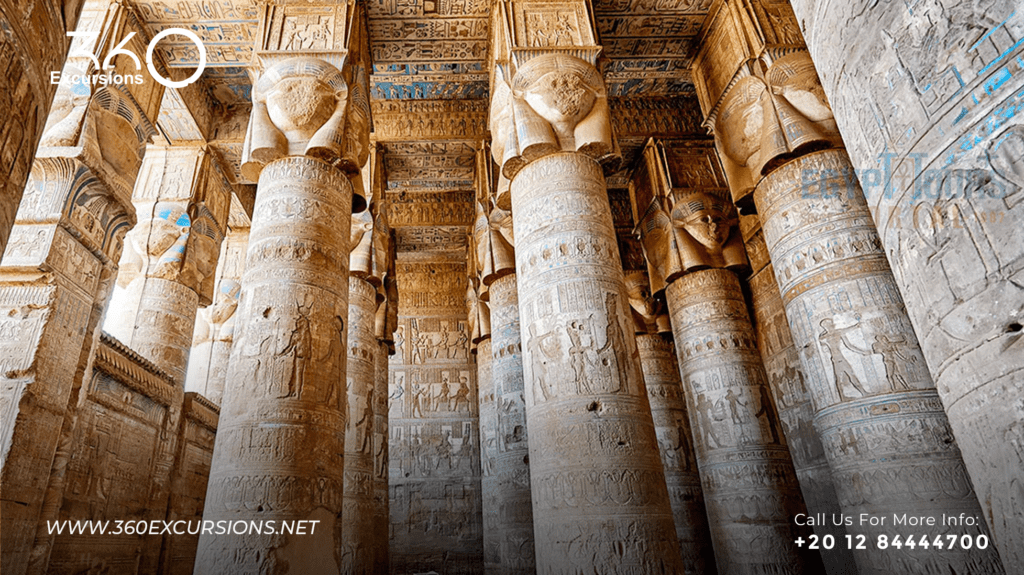
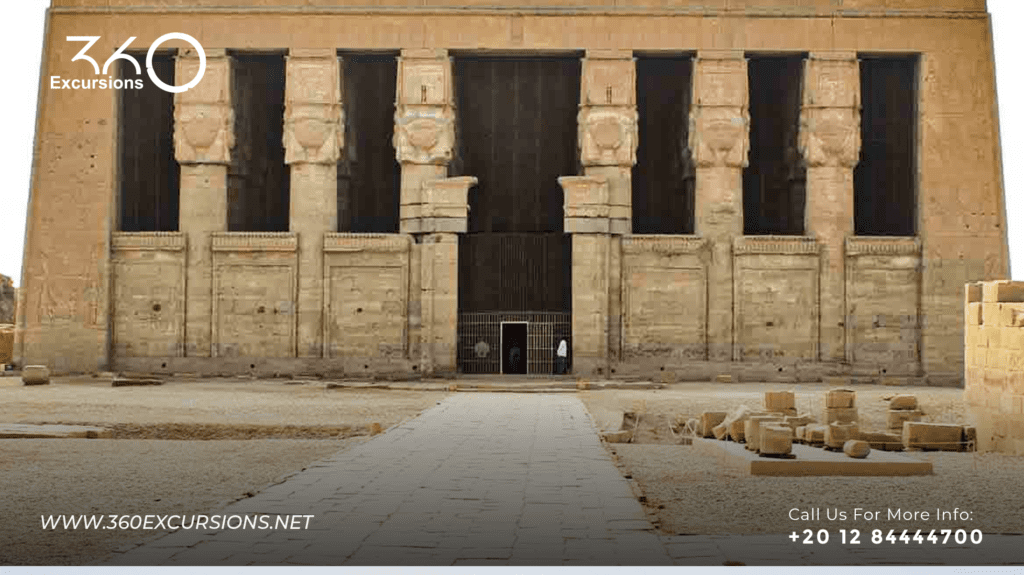
The Hypostyle Hall Of Dendera Temple Complex Is Supported By Massive Columns Topped With Hathor-Head Capitals. These Columns Create A Sense Of Monumental Scale And Artistic Unity. Column Highlights Include:
- Four-Faced Hathor Capitals
- Richly Carved And Painted Surfaces
- Harmonious Proportions
- Strong Visual Rhythm Throughout The Hall
Walking Among These Columns Is One Of The Most Powerful Experiences At Dendera Temple Complex, Comparable To The Grandeur Of The Temple of Hatshepsut.
How To Visit
Dendera Temple Complex Is Accessible And Visitor-Friendly, Making It Easy To Include In Upper Egypt Travel Plans. Visiting Options Include:
- Day Trips From Luxor With Private Transport
- Guided Tours Offering Historical Context
- Combination Tours With Abydos Or Qena
- Independent Visits By Taxi Or Car
Many Travelers Combine Dendera With Broader Itineraries Such As Luxor Day Trip Programs Or Extend Their Journey Through Cairo and Alexandria tour Options.
Allow At Least 1.5 To 2 Hours To Fully Explore The Main Temple And Surrounding Areas.
Best Time To Go
The Best Time To Visit Dendera Temple Complex Is During Cooler Months And Early Hours Of The Day. Ideal Visiting Times Include:
- October To April: Comfortable Temperatures
- Early Morning: Softer Light And Fewer Visitors
Because Much Of The Temple Is Covered, Dendera Temple Complex Is More Comfortable Than Open-Air Sites, Even In Warmer Weather, And Fits Easily Into Organized Itineraries Like Cairo Day Trip by Plane When Exploring Egypt In Depth.
Conclusion
Dendera Temple Complex Is A Celebration Of Beauty, Belief, And Knowledge Preserved In Stone. From Its Astronomical Ceilings And Sacred Crypts To Its Towering Hathor Columns And Harmonious Design, Dendera Temple Complex Offers One Of The Most Complete Temple Experiences In Egypt. Far From The Crowds Yet Rich In Meaning, It Reveals A Civilization That Saw No Separation Between Art, Science, And Spirituality. For Travelers Seeking Depth, Wonder, And Authenticity, Dendera Temple Complex Is An Unmissable Journey Into The Heart Of Ancient Egyptian Thought — Especially When Paired With Other Upper Egypt Icons Like the Valley of the Kings.
FAQs
Is Dendera Temple Complex Worth Visiting?
It Is One Of Egypt’s Best-Preserved And Most Visually Stunning Temples.
How Long Does A Visit Take?
Approximately 1.5 To 2 Hours.
Is Dendera Temple Complex Crowded?
It Is Generally Quieter Than Luxor Temples.
Is Photography Allowed?
Without Flash In Most Areas.
Can I Visit Dendera Temple Complex Without A Guide?
Yes But A Guide Enhances Understanding Of Symbols And History.